Agriculture

Agriculture

Jharsuguda Included in Climate-Smart Direct-Seeded Rice Programme

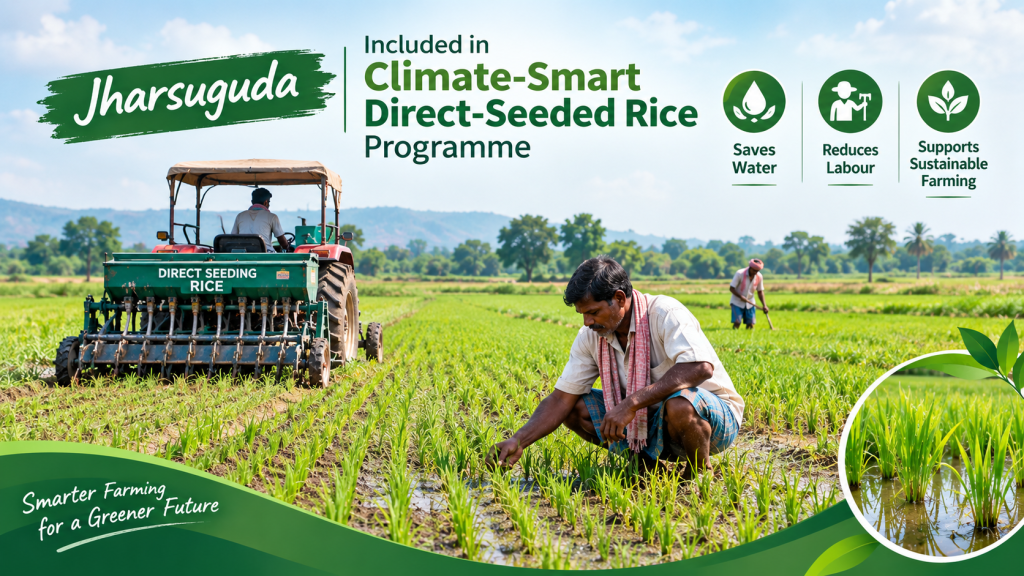
Jharsuguda is increasingly focusing on modern and climate-resilient rice cultivation practices, with direct-seeded rice (DSR) emerging as an important approach for sustainable paddy farming. Unlike the traditional method of raising seedlings in nurseries and transplanting them into flooded fields, DSR involves sowing rice seeds directly in the prepared field. The method can reduce labour requirements and water use while allowing farmers to adopt more efficient cultivation practices. The inclusion of Jharsuguda in climate-smart rice initiatives is particularly significant as farmers in the district face challenges linked to changing weather conditions, irregular rainfall and increasing pressure on agricultural resources. Direct seeding can help farmers manage water more efficiently during the crop establishment stage and reduce the labour-intensive transplanting process. These advantages make the technology relevant for areas where farmers are looking for ways to lower cultivation costs and improve resilience. The programme also supports the broader objective of promoting sustainable agriculture in Jharsuguda. By encouraging improved seed placement, efficient field preparation, better water management and appropriate weed-control practices, climate-smart rice cultivation can help farmers adapt to changing climatic conditions. However, successful adoption of DSR requires proper technical guidance, timely access to suitable equipment and effective weed management. For Jharsuguda farmers, the adoption of direct-seeded rice represents a shift towards more resource-efficient farming. With continued training, agricultural extension support and access to modern farm machinery, climate-smart rice practices can contribute to reducing cultivation costs, conserving water and strengthening the long-term sustainability of paddy production in the district.
Agriculture

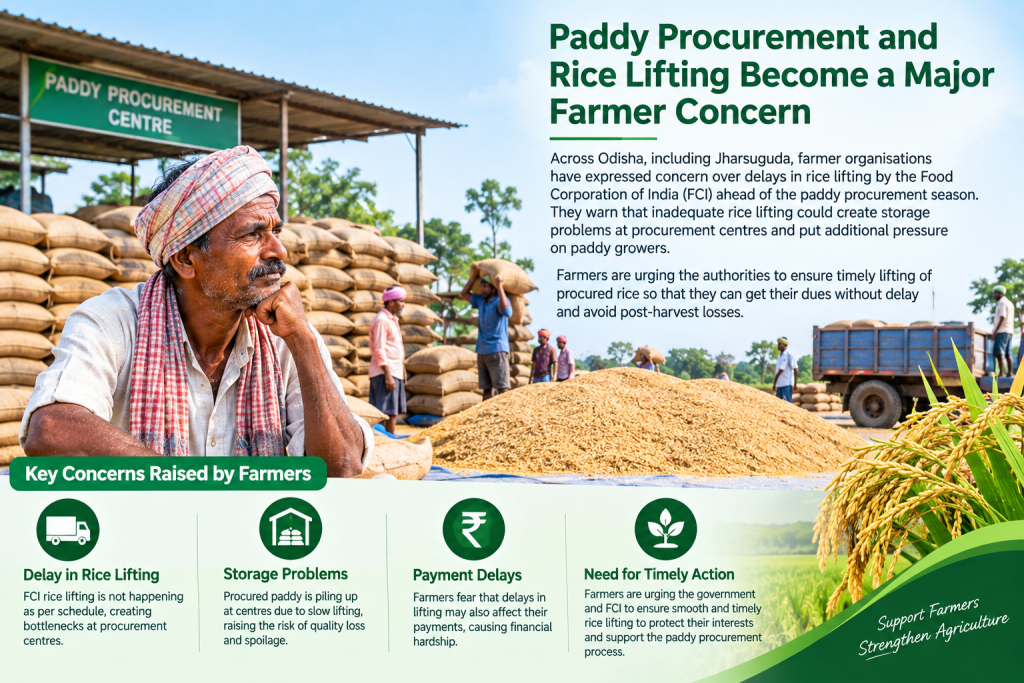
Paddy Procurement and Rice Lifting Become a Major Farmer Concern

Paddy procurement remains an important issue for farmers in Jharsuguda and across Odisha, particularly because timely lifting and processing of procured paddy are essential for keeping procurement centres operational. During the Kharif 2025–26 season, Jharsuguda was among the districts where paddy procurement was underway. Government data presented in Parliament shows that, as of January 30, 2026, Jharsuguda had recorded procurement of 63,783 metric tonnes of paddy from 15,852 farmers, with an MSP value of about ₹141.57 crore. Rice lifting and movement of Custom Milled Rice (CMR) are also important because procurement centres and storage facilities need sufficient capacity to handle incoming paddy. Odisha has been expanding storage infrastructure, while OSCSC continues to coordinate transportation and lifting arrangements for CMR. For farmers, delays in the procurement chain can create uncertainty after harvest. Ensuring smooth transportation, adequate storage, timely milling and efficient lifting can help reduce pressure on procurement centres and protect farmers from post-harvest losses. Odisha’s procurement system is designed to purchase paddy from farmers through agencies such as OSCSC, PACS, WSHGs and Pani Panchayats at MSP.

Agriculture

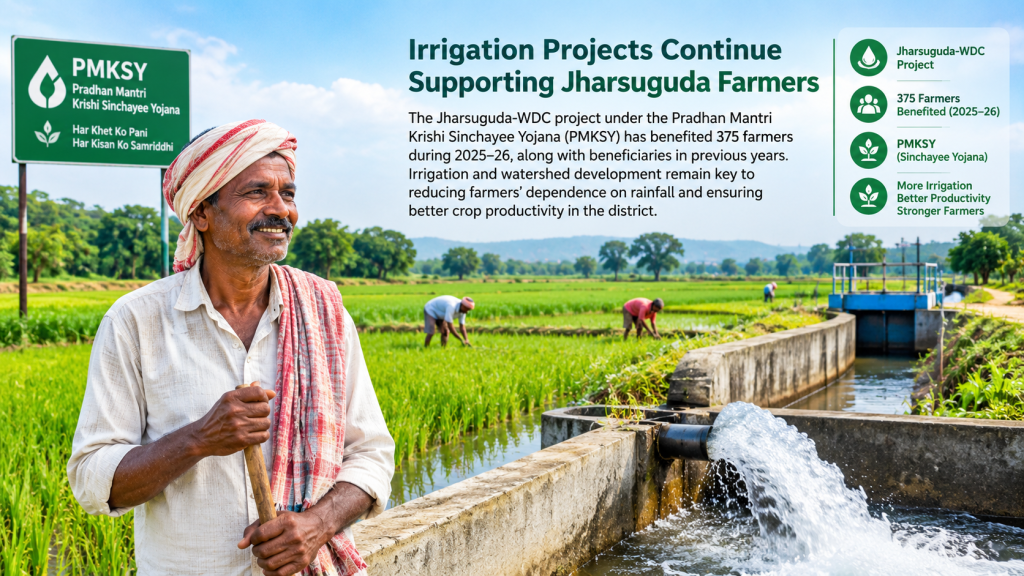
Irrigation Projects Continue Supporting Jharsuguda Farmers

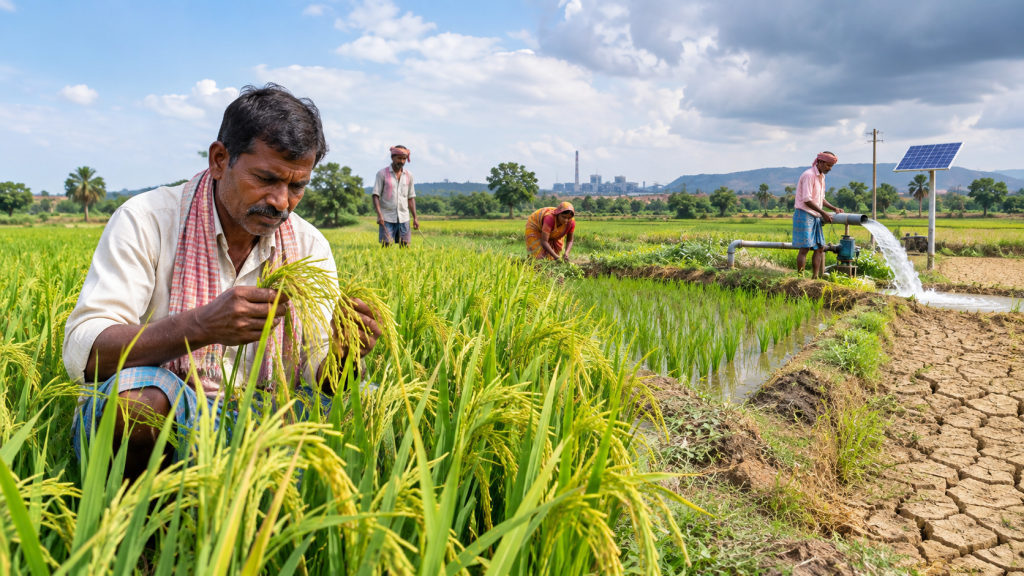
Irrigation and watershed-development projects are continuing to support agricultural activities in Jharsuguda district, helping farmers reduce their dependence on uncertain rainfall. Under the Watershed Development Component of the Pradhan Mantri Krishi Sinchayee Yojana (WDC-PMKSY), the Jharsuguda-WDC project benefited 375 farmers during 2025–26. The project had also recorded benefits for farmers in earlier years. The irrigation programme has also contributed to bringing additional agricultural land under irrigation. Official PMKSY data shows that the Jharsuguda-WDC project brought 10.50 hectares of additional area under irrigation during 2025–26, following 33.55 hectares in 2022–23, 90.75 hectares in 2023–24 and 14.95 hectares in 2024–25. Water-management infrastructure is another important part of the programme. Jharsuguda recorded the construction or revival of 4 water-harvesting structures during 2025–26, in addition to structures created in previous years. Such measures can improve water availability, support soil-moisture conservation and strengthen farming systems in rain-dependent areas. For local farmers, better irrigation access can provide greater flexibility in crop planning and help protect agricultural production during periods of irregular rainfall. Continued investment in irrigation, water harvesting and watershed development is therefore important for strengthening the district’s agricultural economy.

Agriculture

Climate-Resilient Farming Gains Importance in Jharsuguda

Jharsuguda’s rice-based farming is increasingly focusing on climate-resilient agricultural practices as farmers face challenges from changing rainfall patterns, drought conditions and other climate-related risks. A 2026 study covering smallholder farmers in Jharsuguda found that farmers exposed to climate-resilient interventions showed significantly higher adoption of practices such as drought-tolerant varieties, seed treatment and crop insurance. The study also found that intervention farmers recorded better adoption levels and higher annual income compared with farmers in control villages. These findings highlight the importance of improved farming technologies, farmer training, access to agricultural information and institutional support in making agriculture more resilient. For Jharsuguda farmers, climate-resilient farming can help reduce dependence on uncertain rainfall, protect crop yields and improve long-term farm income. Odisha’s agriculture programmes are also promoting integrated farming, soil and moisture conservation and climate-resilient agricultural systems across the state.

Agriculture

₹7.76 Crore CM-KISAN Assistance Reaches Jharsuguda Farmers

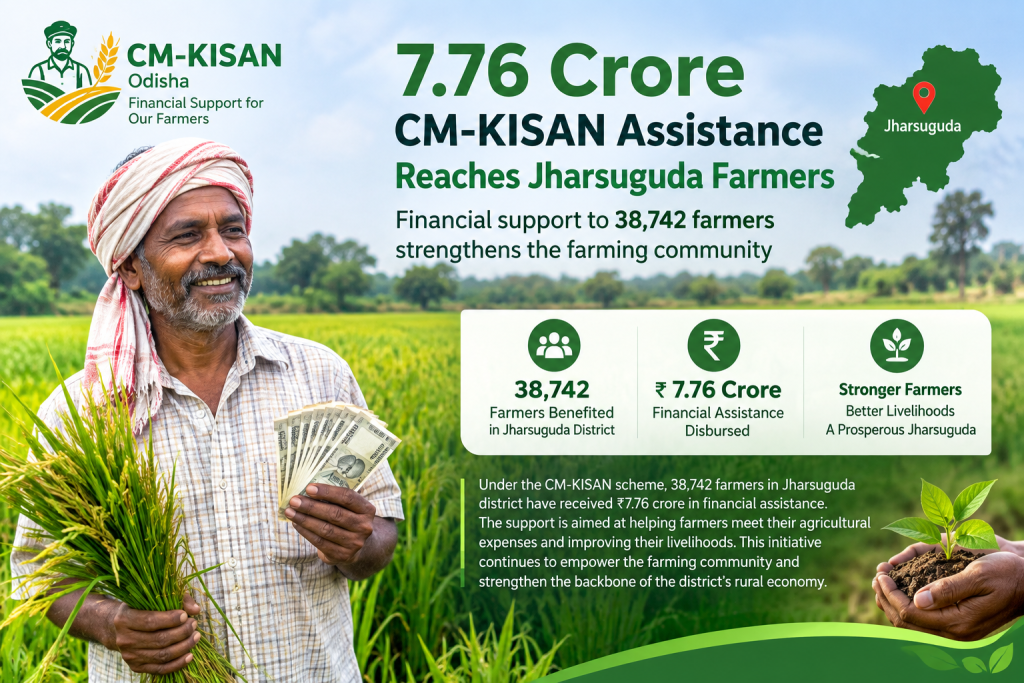
Under the CM-KISAN scheme, around 38,742 farmers in Jharsuguda district have benefited from financial assistance amounting to approximately ₹7.76 crore. The support includes small and marginal farmers and agricultural workers, helping them meet farming-related expenses and strengthen their livelihoods. The financial assistance is particularly important for farmers preparing for the Kharif season, as it can help with expenses such as seeds, fertilizers, agricultural inputs and other cultivation needs. The initiative is aimed at providing direct financial support to rural households and strengthening the agricultural economy of Jharsuguda.

Agriculture

Fly Ash Contamination Raises Concern Among Jharsuguda Farmers

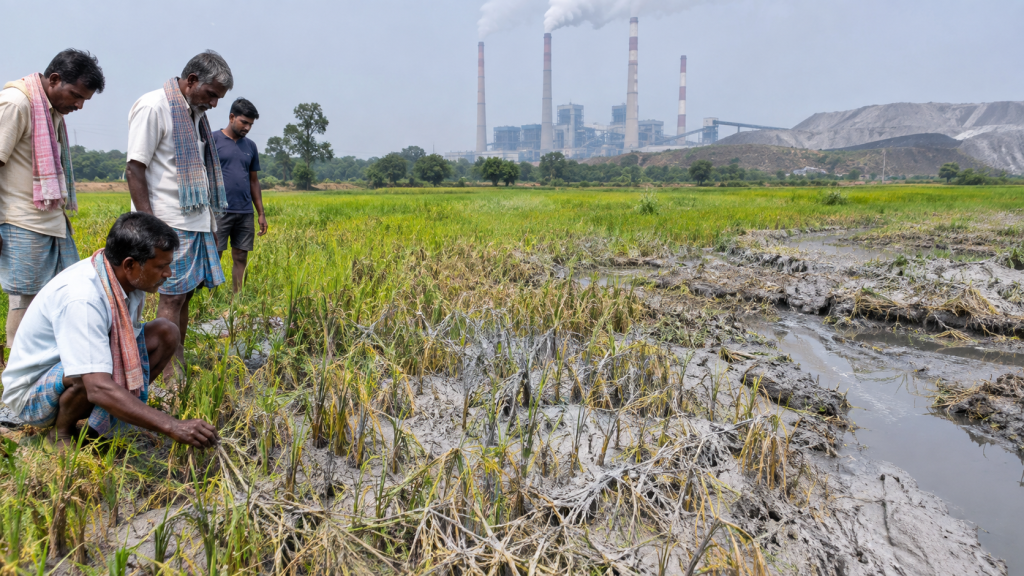
Agricultural fields in parts of Jharsuguda district, particularly around the Belpahar area, have faced concerns over fly ash entering farmland following heavy rainfall. Farmers in affected villages reported that large quantities of fly ash were washed into cultivated fields, covering portions of the agricultural land. The situation has created concerns about crop growth, soil quality and the future productivity of the affected farmland. Farmers have expressed the need for immediate steps to remove the deposited fly ash and prevent further contamination of agricultural fields. Since agriculture remains an important source of livelihood for many rural families, damage to cultivated land can directly affect household income. Farmers have also sought appropriate assistance and compensation for losses caused by the incident. The issue highlights the importance of proper management of industrial waste and stronger protective measures around agricultural areas.

Scroll to Top